


Profitable intraday trading advice is something every trader looks for, whether you are just starting out or have been trading for years. Intraday trading means you buy and sell stocks or other assets within the same trading day. You do not hold them overnight. It sounds simple, but it takes real skill, a clear plan, and strong self-control to do it well. The good news is that with the right habits and a few smart rules, you can trade better and protect your money at the same time.
What Is Intraday Trading and Why Does It Matter?
Intraday trading is the practice of opening and closing all your trades before the market closes for the day. Traders try to make money from small price movements that happen during market hours. Because everything happens so fast, you need to stay focused and make quick decisions based on data, not feelings.
This type of trading is different from long-term investing. You are not buying a stock to hold for months or years. Instead, you are looking for short windows of opportunity during the trading session. That is why preparation, speed, and discipline matter more than almost anything else.
Choose the Right Stocks to Trade
One of the best pieces of intraday trading advice you will ever receive is to focus on highly liquid stocks. Liquid stocks are shares that many people buy and sell every day. Because they have high trading volume, it is easy to enter and exit trades quickly without a big change in price.
Experts recommend starting with two or three large-cap stocks rather than trying to trade too many at once. When you focus on fewer stocks, you learn their price patterns better. This makes it easier to spot good entry and exit points during the day.
Always Use a Stop-Loss Order
A stop-loss order is one of the most important tools in intraday trading. It automatically closes your trade if the price moves against you by a set amount. This way, you limit how much money you can lose on a single trade.
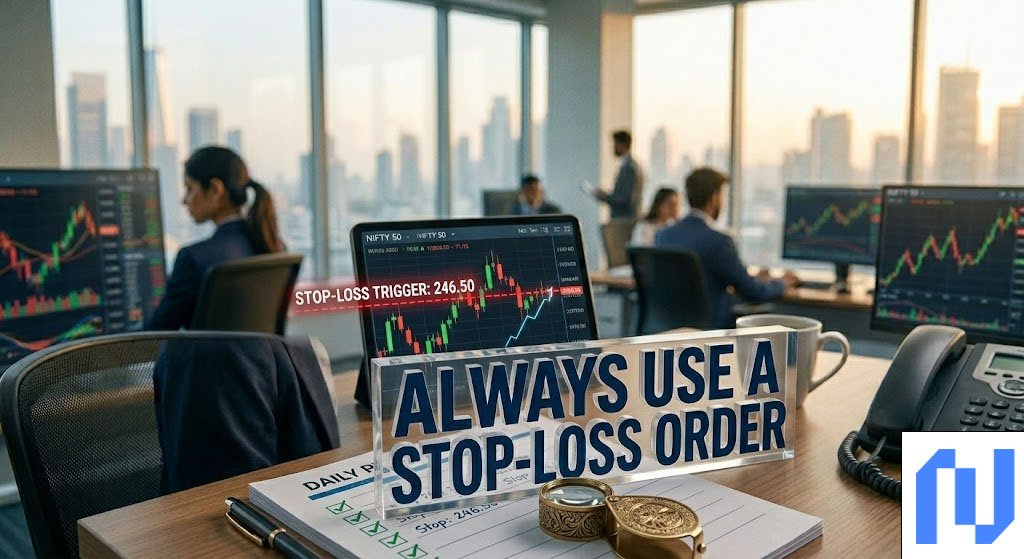
Many beginner traders skip stop-loss orders because they think the price will come back in their favor. This is a very dangerous habit. According to financial experts, always setting a stop-loss before you enter a trade is a core rule that separates disciplined traders from those who lose money fast. Never assume the market will recover in your favor.
Learn to Read the Market Before You Trade
Before you place any trade, take time to check the market. Look at price charts, recent news, and any economic reports that may be released that day. Big announcements like interest rate decisions or company earnings reports can cause sudden price movements.
Simple tools like Moving Averages and the RSI (Relative Strength Index) can help you understand whether a stock is trending up or down. You do not need to be an expert to use these tools. Starting with a 5-minute or 15-minute chart gives you a clear picture of short-term price behavior without overwhelming you with too much data.
Control Your Risk on Every Single Trade
Risk management is the heart of profitable intraday trading. A good rule is to never risk more than 1% to 2% of your total trading capital on a single trade. This way, even if you have a few bad trades in a row, you still have enough money to keep going.
A simple formula many traders use is a risk-reward ratio of at least 1:2. This means for every dollar you risk, you aim to make two dollars. Over time, even if you lose half your trades, you can still come out profitable. Set a daily loss limit too. When you hit that limit, stop trading for the day. This protects you from making emotional decisions after a losing streak.
Avoid Overtrading and Emotional Decisions
One of the biggest mistakes new traders make is trading too often. More trades do not always mean more profit. In fact, overtrading increases your costs through fees and spreads, and it also raises your risk. You should only enter a trade when your plan gives you a clear signal to do so.
Emotions are another major problem in intraday trading. Greed makes traders hold on too long. Fear makes traders exit too early. Both hurt your results. The best traders treat every trade like a business decision. They follow their plan and do not let feelings change their actions. If you feel upset or anxious, it is better to step away from the screen and take a break.
The Best Time to Trade During the Day
Not all market hours are equal. The first 15 to 30 minutes after the market opens can be very unpredictable. Prices jump around a lot as traders react to overnight news. Many experienced traders wait for the market to settle before placing their first trade.
The best trading windows are usually between 9:45 AM and 11:30 AM and again between 2:00 PM and 3:30 PM. During these times, there is strong price movement and enough volume to enter and exit trades smoothly. Avoiding lunchtime hours when the market is slow can also help you avoid false signals and choppy price action.
Keep a Trading Journal
Keeping a trading journal is one habit that separates good traders from great ones. After each trading session, write down what trades you made, why you entered, what happened, and what you learned. Over time, your journal becomes your personal guide to improving.
Looking at your past trades helps you spot patterns in your own behavior. Maybe you always lose when you trade in the first 10 minutes. Maybe you do better with certain types of stocks. Your journal shows you these patterns clearly so you can adjust your strategy and get better results over time.
Practice Before You Use Real Money
If you are new to intraday trading, never start with real money right away. Use a demo account first. Most trading platforms offer demo accounts where you can practice with virtual money. This gives you a safe space to test your strategy and build confidence without any financial risk.
Think of a demo account like a training session before a game. You get to make mistakes, learn from them, and improve your skills without losing anything real. Once you feel consistent and comfortable with your plan on a demo account, you can slowly start trading with small amounts of real money.
Conclusion
Intraday trading can be a useful way to earn from the stock market, but only if you approach it with the right mindset and tools. Focus on liquid stocks, always use a stop-loss, manage your risk carefully, and keep learning from every trade. Simple habits like these make a big difference over time. Start small, stay disciplined, and remember that protecting your money is always more important than chasing quick profits.
Frequently Asked Questions (FAQs)
Q1. What is the best time to do intraday trading?
The best trading hours are usually between 9:45 AM and 11:30 AM and again from 2:00 PM to 3:30 PM. These windows offer good volume and clear price movement.
Q2. How much money do I need to start intraday trading?
You can start with a small amount. However, it is important to only use money you can afford to lose and to risk no more than 1% to 2% of your capital per trade.
Q3. Is intraday trading risky for beginners?
Yes, it carries risk. But with a clear plan, proper stop-loss orders, and risk management rules, beginners can reduce those risks significantly.
Q4. What is a stop-loss order and why do I need it?
A stop-loss order automatically closes your trade when the price drops to a level you set. It protects you from losing too much money on a single bad trade.